Small turf problems are easier to fix before they spread. Here are the common signs Arvada homeowners should watch for, and what each usually means.
How do I know if my turf needs a repair?
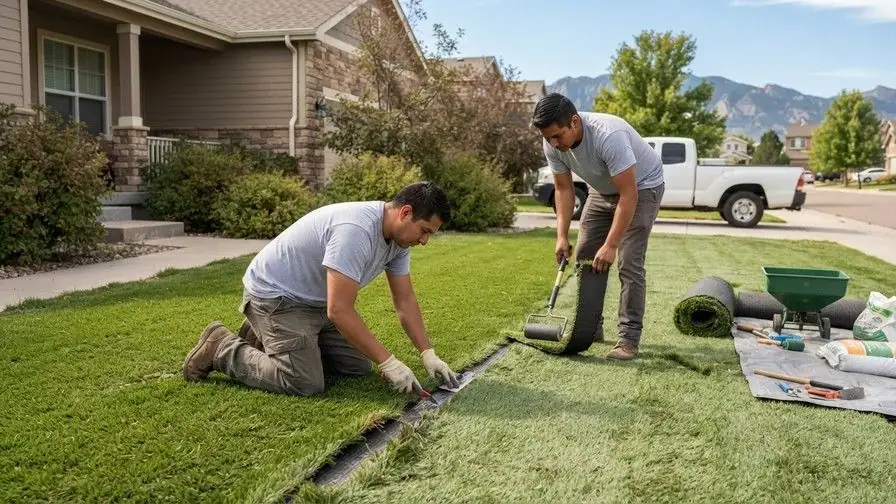
Watch for seams that curl or separate, edges that lift along beds or walks, tears, holes or melted spots and areas that stay flat even after brushing. Most of these can be repaired with seam tape, patches, new fasteners or fresh infill. If many areas are failing or the fibers are brittle, replacement may be more practical. Walk the lawn after heavy rain or snowmelt, when lifting is easiest to spot.
Seams and Edges
A seam that has started to curl or show a gap often means the adhesive or tape has let go. Edges that lift along beds and walkways may have loose fasteners. Both are common repairs.
Walk the lawn after heavy rain or snowmelt, when lifting is easiest to spot.
Tears, Holes and Burns
Pets, sharp objects, fire pits and grills can damage turf. Small damage can be cut out and patched with matching turf. Keep any leftover turf from your install for this purpose.
Move grills and fire features onto a hard surface to prevent future burns.
Flat or Matted Areas
Traffic paths and spots under furniture can flatten over time. Brushing against the grain and adding infill usually revives them. If they do not recover, the fibers may be nearing the end of their life.
Moving furniture occasionally helps prevent flat spots.
Catching Problems Early
Fixing small issues early keeps turf looking good. For a repair quote, we can connect you with an independent local turf provider serving Arvada.